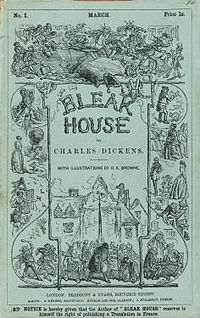
The compelling formula of mysterious origins, wills and inheritance drives the narrative and we always wanted to find out more. I also admit to shedding a tear at the death of Jo, the crossing sweeper, despite the characteristic mawkishness. Dickens was a great walker and a couple of recent articles mentioned that he walked to help him think but in the process he came to know the byways of London in great detail, giving him the keenest awareness of filth and degradation but also of the immense gap between rich and poor. This is very much a novel outraged at that contrast and we read of the stately life of Sir Leicester Dedlock, whose seat at Chesney Wold in Lincolnshire is much described. Dickens seems inclined to view the rural village an idyll that contrasts favourably with the urban slime and squalor of the Great Wen. The Dedlocks also have a Georgian town house, essential for Parliament and for The Season, although Lady Honoria Dedlock disdains the social round by the period in which the novel is set. She is a noted beauty, much younger than her husband and Dickens makes repeated mention of her celebrity amongst those who read about it. Nothing new under the sun, it seems. However, Sir Leicester's devotion to her is genuinely touching. He would clearly have forgiven the shameful events of her early life.
The novel has dual narration, by an authorial voice but also, rather breathlessly, by Esther Summerson (Dickens sole female narrator) whose largely loveless childhood is succeeded by a somewhat sickeningly delightful life with her guardian, John Jarndyce, who has sensibly eschewed involvement in the complex inheritance battle Jarndyce and Jarndyce, which comes to blight the life of his other two wards. Dickens had a good understanding of and fascination with the law of inheritance, which had long been in need of reform. The Court of Chancery and this turgid legal battle is at the heart of the novel and produces some very fine writing. Another key character is also a lawyer. Mr Tulkinghorn is an eminent member of Lincoln's Inn, whose duty is to protect the interests of that noble house, the Dedlocks. Dickens' description of the solitary and omniscient lawyer descending to his cellar to select a bottle of ancient port for private pleasure is memorable.
The plot is complex with several strands and there are many characters. Dickens manipulates them deftly and I found no sign that he lost track over 19 monthly instalments. There was controversy over his inclusion of an incident of spontaneous combustion as a plot point but he had researched the matter and defended the issue against his critics. Internet searches suggest that it remains very controversial and instances cited tend to appear on websites associated with the paranormal, including one relating to Wilfrid Gowthorpe of Pocklington which I came across some years ago.
Giving star ratings to works of art is a modern habit that is doubtless despised by many persons of letters but I find it a useful way of sorting sheep from goats; since we know not the day nor the hour, time spent on poor books is time wasted. This is a fine book, notwithstanding the various criticisms that I have made. Ultimately I am more of a Trollope man than a Dickens man but I wish that I could write so well and Dickens at his best is outstanding.

No comments:
Post a Comment